Clients book blowouts for weddings, photos, interviews, and Fridays, and many could not say exactly what they are buying beyond good hair. A blowout is a styling service: hair is washed, then dried section by section with a round brush under tension, which smooths the cuticle, builds volume or sleekness depending on the brush work, and sets a shape that holds for days. There is no chemical change. The result is technique, heat, and patience, arranged in the right order.
Because nothing permanent happens, a blowout's lifespan is set by how it is treated afterward: sleep, showers, sweat, and humidity are its natural predators. This guide explains what happens in the chair at a Mooresville salon and the routine that stretches a Friday blowout through the following Wednesday.
What happens in the chair
The service starts with a thorough wash, because a blowout built on yesterday's oil and product will not hold its shape. After conditioning and detangling, the stylist applies product matched to the goal: volume at the roots for a bouncy finish, smoothing products for a sleek one. Hair is rough-dried first to remove most of the water, since brush work on soaking hair takes forever and achieves little.
Then comes the defining part. Working in small sections, the stylist wraps hair around a round brush, directs heat along it, and pulls with steady tension from root to end, finishing each section with a shot of cool air that locks the shape. The tension and the cooling are what separate a blowout from home drying. Most home attempts fail on section size: sections too big dry on the surface and stay wild underneath.
Who it suits and when to book it
A blowout suits anyone whose hair fights them: thick hair that takes an hour to dry, wavy hair that will not sit smooth, fine hair that goes flat by noon. It is also the practical choice before an event, because it puts the hair in professional hands on the day rather than leaving it to a stressful morning experiment. Many clients book a blowout as the finish to a cut or color appointment for exactly this reason.
Timing matters around exercise and weather. Book after the week's hardest workout, not before it, and if rain or a lake day is on the calendar, either protect the hair completely or move the appointment. A blowout is a fair-weather friend. Given four dry, ordinary days, it will repay the appointment handsomely.
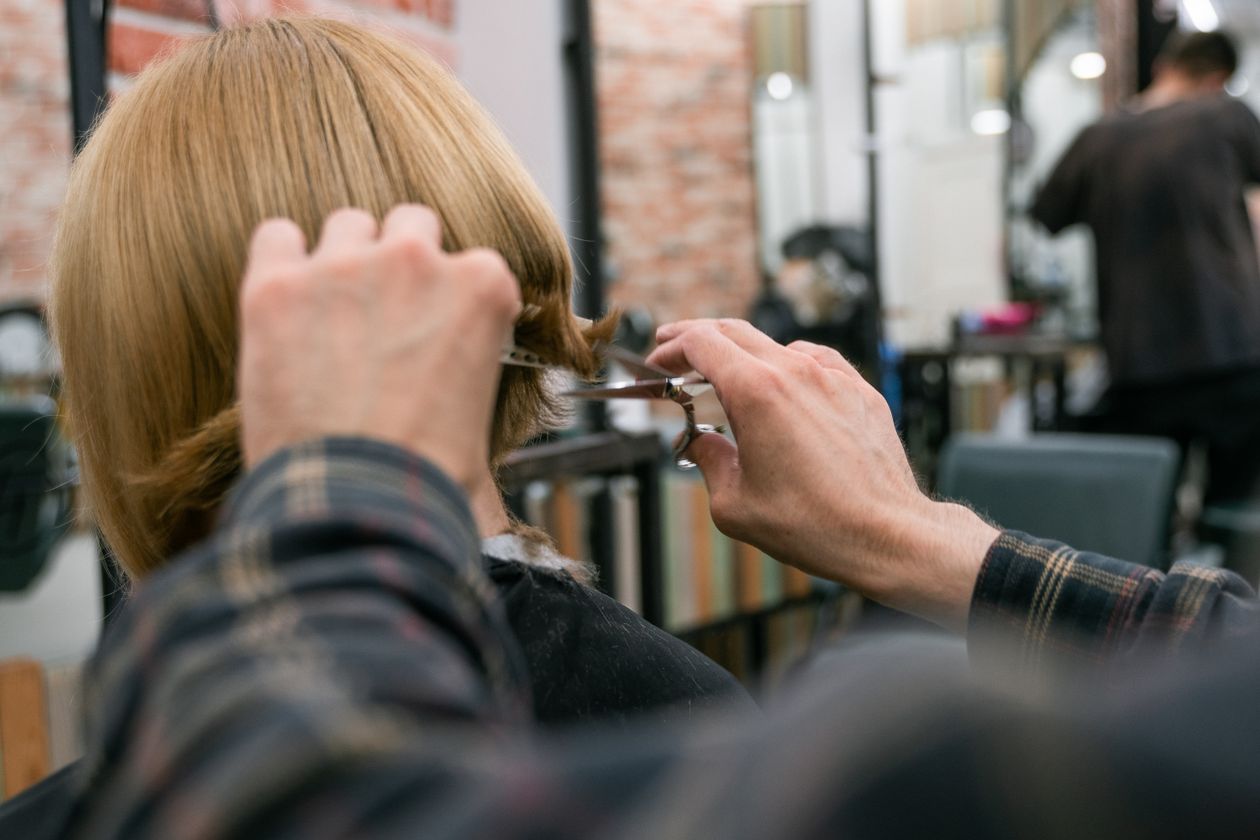
Sleep: where blowouts are won and lost
Night one decides the week. Hair crushed under a head on a cotton pillowcase wakes creased, frizzy at the surface, and flat at the roots. The fixes are small: a silk or satin pillowcase, or hair gathered loosely in a high, soft scrunchie bun keeps the lengths smooth and the volume off the pillow's weight. What matters is reducing friction and pressure, the two things that undo brush-set shape.
In the morning, resist the urge to fix it with water or a full restyle. A dry brush-through, a touch of heat on just the front sections if needed, and dry shampoo at the roots on day two or three handles almost everything. Each unnecessary wash or wetting spends lifespan the blowout cannot earn back.
- Hair up and a shower cap for every shower, no exceptions
- Satin pillowcase, or a loose high bun with a soft scrunchie
- Dry shampoo at the roots on day two, before workouts too
- Hands off on humid days after the morning smooth
- No water fixes: a dry brush-through and front-section touch-up only
- Wash when the scalp says so, usually day four or five
Showers, sweat, and humidity
Shower with the hair up and a cap, every time, no exceptions negotiated. Steam alone can re-curl a hairline, and a single careless shower shortens a blowout by days. The same goes for workouts: hair goes up before, stays up until the scalp is fully cool and dry after, and gets dry shampoo before the workout rather than after if you know you will sweat, so the product is in place to absorb it.
Piedmont humidity is the background condition all summer. A light anti-humidity spray on the surface helps, but the real defense is minimal handling. Every brush-through on a humid day invites the hair to absorb more air moisture. Smooth it once in the morning with palms and product, then leave it alone and let the set do its work.
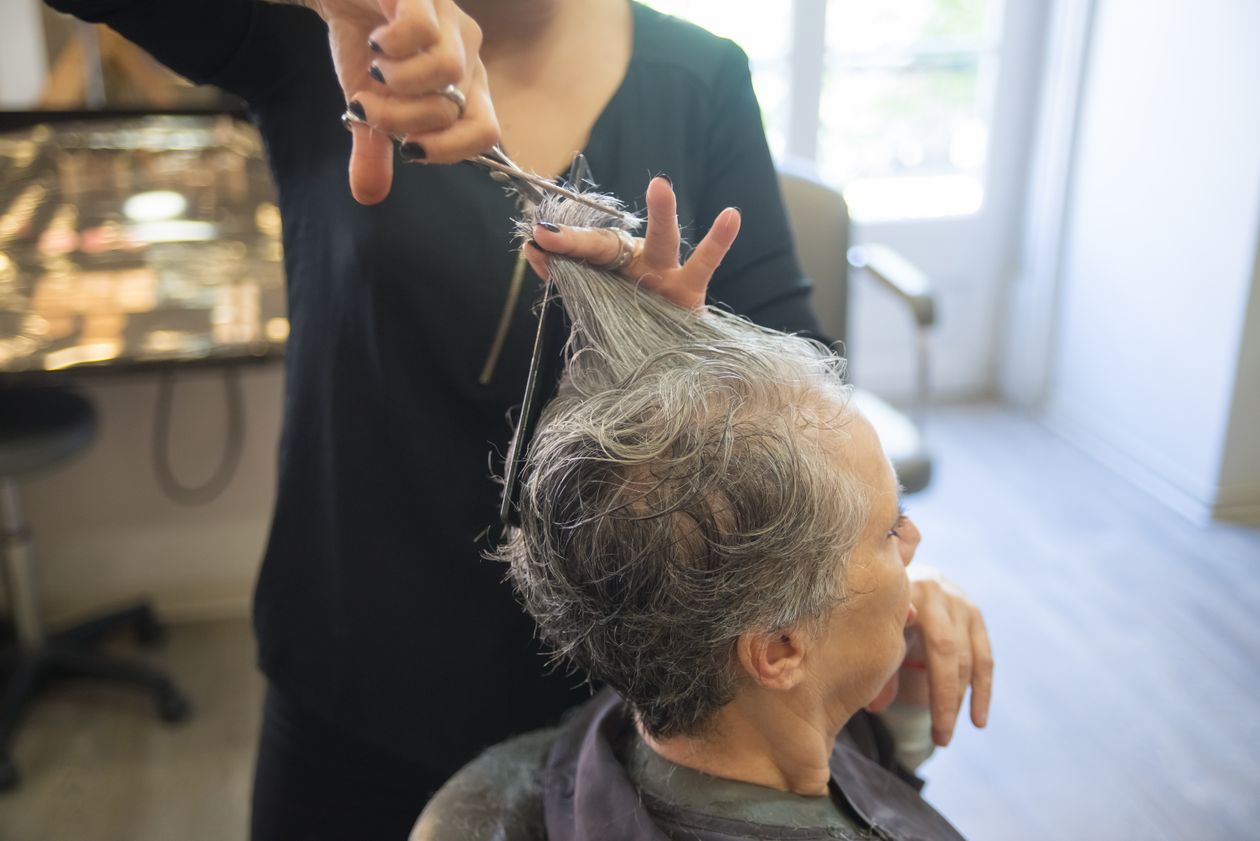
Knowing when it is done
By day four or five, most blowouts have given what they have: the roots need washing even if the lengths still look good. That is the natural end, not a failure. A dry shampoo can buy one more day for a good cause, but hair and scalp are meant to be washed, and stretching past the scalp's comfort to protect a style is the trade running the wrong way.
Clients who love the result often settle into a standing rhythm, a blowout as a regular appointment, sometimes paired with the bang trims and clean-ups that keep the shape between cuts. It is worth asking at the desk what a standing booking looks like. Hair that behaves all week is a legitimate service, and for many Mooresville clients it replaces a drawer of products that never quite worked.
Common questions
How long does a blowout last?
Typically three to five days with care: hair up and capped in the shower, a satin pillowcase or loose high bun at night, and dry shampoo at the roots from day two.
Is a blowout damaging to hair?
It is a heat styling service with no chemicals. With heat protectant and professional technique, occasional blowouts are gentle compared with daily home hot-tool use.
Can I get a blowout without a cut or color?
Yes. A blowout is its own appointment on salon menus, and many clients book it alone before events or as a standing weekly or biweekly service.
Photos in this guide are representative stock images.
← All guides from Salon Zele← Back to Salon Zele